
My Story
I am a clinical professor of medicine at the University of Iowa Carver College of Medicine in Iowa City, Iowa, U.S.A., where I teach internal medicine residents in their primary care clinics. I also do clinical research and have published over 60 peer-reviewed scientific abstracts, posters, and papers.
In addition to being a doctor, I am also a patient with a chronic, progressive disease. I was diagnosed with relapsing remitting multiple sclerosis in 2000, around the time I began working at the university. By 2003 I had transitioned to secondary progressive multiple sclerosis. I underwent chemotherapy in an attempt to slow the disease and began using a tilt-recline wheelchair because of weakness in my back muscles.
It was clear: eventually I would become bedridden by my disease. I wanted to forestall that fate as long as possible.
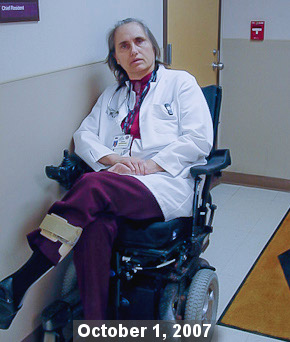

Because of my academic medical training, I knew that research in animal models of disease is often 20 or 30 years ahead of clinical practice. Hoping to find something to arrest my descent into becoming bedridden, I used PubMed.gov to search scientific articles about the latest multiple sclerosis research. Night after night, I relearned biochemistry, cellular physiology, and neuroimmunology to understand the articles. Unfortunately, most of the studies were testing drugs that were years away from FDA approval. Then it occurred to me to search for vitamins and supplements that helped any kind of progressive brain disorder. Slowly I created a list of nutrients important to brain health and began taking them as supplements. The steepness of my decline slowed, for which I was grateful, but I still was declining.
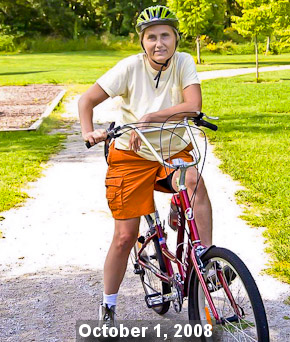
In the summer of 2007, I discovered Functional Medicine, an organization devoted to helping clinicians use the latest scientific discoveries to take better care of those with complex chronic diseases. As a result I developed a longer list of vitamins and supplements that were good for my brain. Then I had an important epiphany. What if I redesigned my diet so that I was getting those important brain nutrients not from supplements but from the foods I ate? I used what I had learned from the medical literature, Functional Medicine, and my knowledge of the Hunter-Gatherer diet—the most nutritious of any diet—to create my new food plan. At that same time, I also learned about neuromuscular electrical stimulation and convinced my physical therapist to give me a test session. It hurt a lot, but I also felt euphoric when it was finished, likely because of the endorphins my body released in response to the electrical stimulation. In December 2007, I began the Wahls Protocol™. The results stunned my physician, my family, and me: within a year, I was able to walk through the hospital without a cane and even complete an 18-mile bicycle tour.
Bio
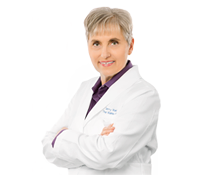
Dr. Terry Wahls is a clinical professor of medicine at the University of Iowa where she conducts clinical trials. She is also a patient with secondary progressive multiple sclerosis, which confined her to a tilt-recline wheelchair for four years. Dr. Wahls restored her health using a diet and lifestyle program she designed specifically for her brain and now pedals her bike to work each day. She is the author of The Wahls Protocol: How I Beat Progressive MS Using Paleo Principles and Functional Medicine, The Wahls Protocol: A Radical New Way to Treat All Chronic Autoimmune Conditions Using Paleo Principles (paperback), and the cookbook The Wahls Protocol Cooking for Life: The Revolutionary Modern Paleo Plan to Treat All Chronic Autoimmune Conditions.
She conducts clinical trials that test the effect of nutrition and lifestyle interventions to treat MS and other progressive health problems. Learn more about Dr. Wahls’ clinical trials here. She also teaches the public and medical community about the healing power of the Paleo diet and therapeutic lifestyle changes that restore health and vitality to our citizens. She hosts a Wahls Protocol Seminar every August where anyone can learn how to implement the Protocol with ease and success. Follow her on Facebook (Terry Wahls MD) and on Twitter at @TerryWahls.
Personal Connection to Iowa
I am a fifth generation Iowan who grew up on a farm in northeast Iowa and have raised a son and daughter here as well. I have a bachelor’s degree of fine arts from Drake University in Studio Art – Painting and a medical doctorate from the University of Iowa. I completed an internal medicine residency at the University of Iowa and have been on faculty at Iowa since 2000.
I live in Iowa City with my spouse, Jackie. Our daughter, Zebby, is an undergraduate at the University of Iowa; our son Zach, a graduate of the University of Iowa, became well-known for his testimony at the Iowa State House opposing the proposed amendment to ban gay marriage, which went viral in February 2011, receiving nearly twenty million views. His book, My Two Moms, was published April 2012.
Published Articles
Read published works, scientific articles, and medical humanities essays written by Dr. Terry Wahls.